


The easiest version of an AI character is one image.
Generate somebody you like.
Save the result.
Done.
The difficult version begins when the same person has to come back tomorrow.
Then next week.
Then on a magazine cover, inside a product card, in a vertical story crop, beside another teammate, in a video, wearing different clothes, under different light, at a different camera angle, and still look recognizably like the same identity.
That is where “AI image generation” quietly turns into asset management.
Ariy&Co learned this because Nia, Remy, Zyla, Aletheia and Hermes are not one-off campaign characters.
They are recurring product/editorial identities.
If Remy looks like a different person every three posts, the problem is not that one image is ugly.
The identity has stopped working.
A good generation can be the wrong reference
One of the dangerous things about generated imagery is how quickly a beautiful accident can become policy.
You make an image.
The face is slightly different.
The proportions have shifted.
The hair is a little off.
But the image itself is excellent.
It performs well. Everyone likes it. It starts appearing in layouts.
Soon the next generation uses that image as reference.
Then a later generation references that one.
Identity drift has become a family tree.
We need to distinguish an experiment from an approved image, and an approved image from the reference that defines the character. Rejected and retired versions need to stay out of the next generation.
A popular image does not become the new face of a teammate simply because it was popular.
The canonical reference set is supposed to change deliberately.
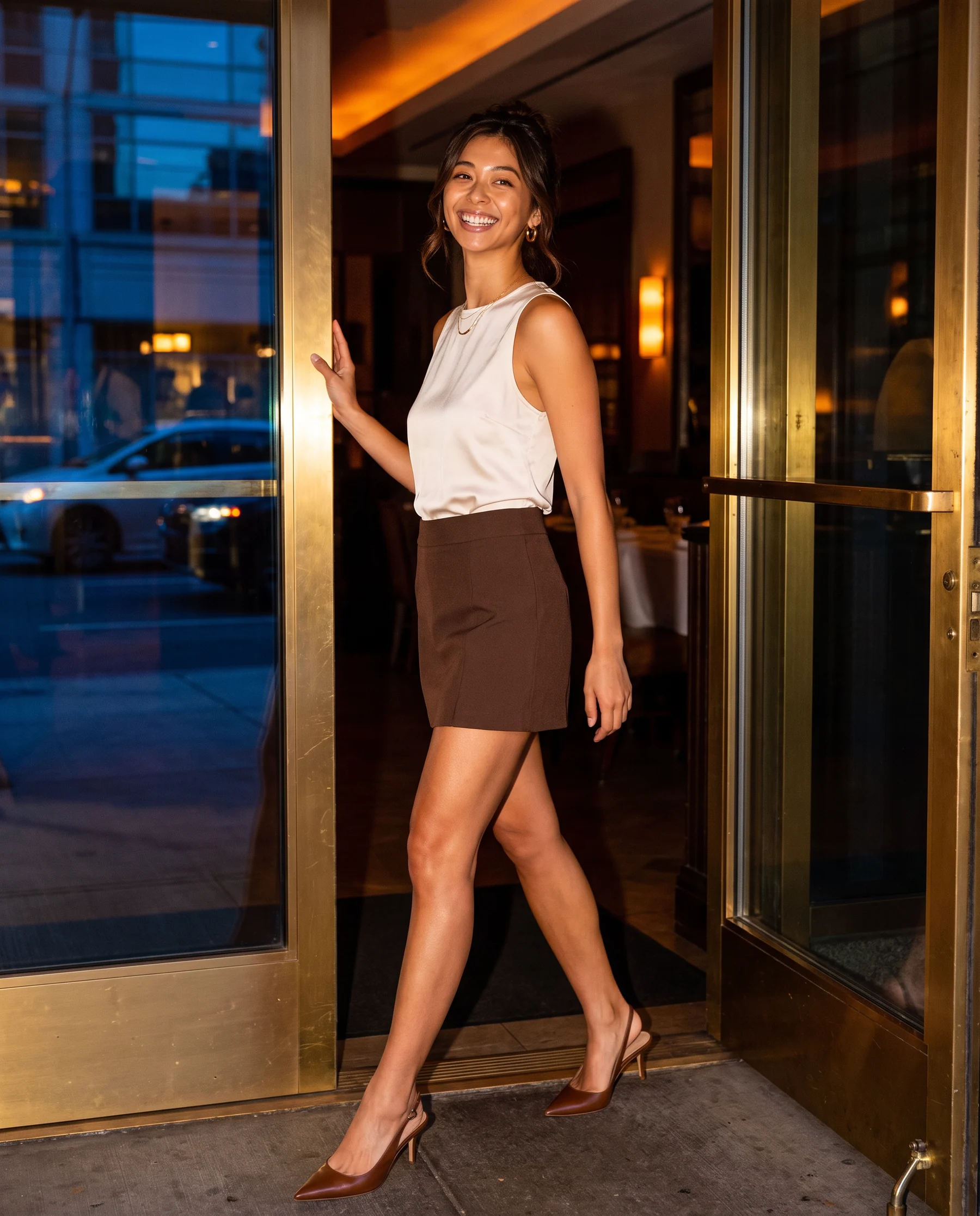
The prompt is not the identity
Once an identity exists, text-only regeneration is a weak preservation strategy.
A prompt can describe hair, approximate age, wardrobe, lighting, setting, and facial features.
It cannot reliably encode the visual relationships inside a face well enough to guarantee that fifty independent generations will return the same person.
That is why Ariy&Co's current rule is asset-first:
Use approved visual references whenever the generation workflow supports them.
The text prompt still matters. It describes the scene. The references preserve the subject.
That distinction changes how we use tools such as Higgsfield and OpenArt.
The interesting question is no longer only which model makes the prettiest image.
It is which workflow lets us carry identity through the kind of variation the publication actually needs.

Consistency is not sameness
Locking an identity does not mean generating the same portrait forever.
Nia should be able to appear at the Front Desk, in a quieter editorial setting, at home in a visual essay, in different seasons, in different wardrobe families, and under different camera language.
Remy should be able to move between pipeline/product context and sharper Montréal-inspired editorial imagery.
Zyla should have more expressive visual territory without becoming a generic influencer.
Aletheia should remain composed and structured without turning into an authoritarian executive.
The point of a canonical identity is to make variation safer.
Face, defining features, broad proportion, and recognizable visual identity stay stable.
Wardrobe, pose, setting, mood, season, and framing can move.
The reference is the anchor.
The image is allowed to live.
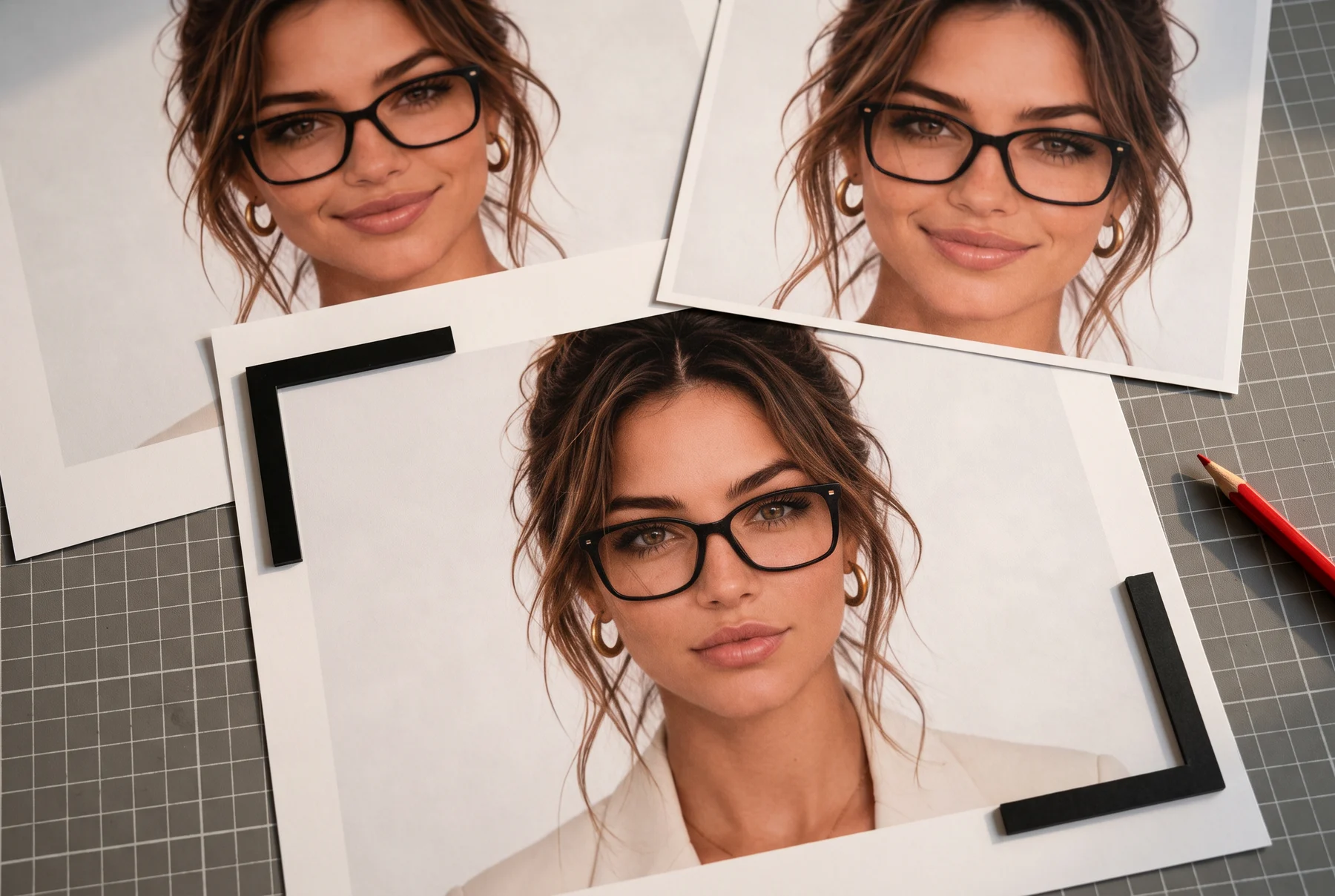
Cropping is part of generation
An image can be perfect at 4:5 and useless at 16:9.
This sounds trivial until the same piece of art needs to become:
- a desktop Journal hero;
- an article card;
- an Instagram feed post;
- a story;
- a square preview;
- a magazine cover.
Regenerating each crop independently creates another opportunity for the face, clothing, environment, or object placement to change.
So the preferred workflow is moving toward one approved master composition followed by controlled crop, outpaint, or reframe work.
For an approved editorial hero, Ariy&Co generally wants a family of outputs:
- 16:9;
- 4:5;
- 3:2;
- 1:1 where useful;
- 9:16.
That crop family belongs to the asset.
It should not be five unrelated attempts that happen to share a prompt.
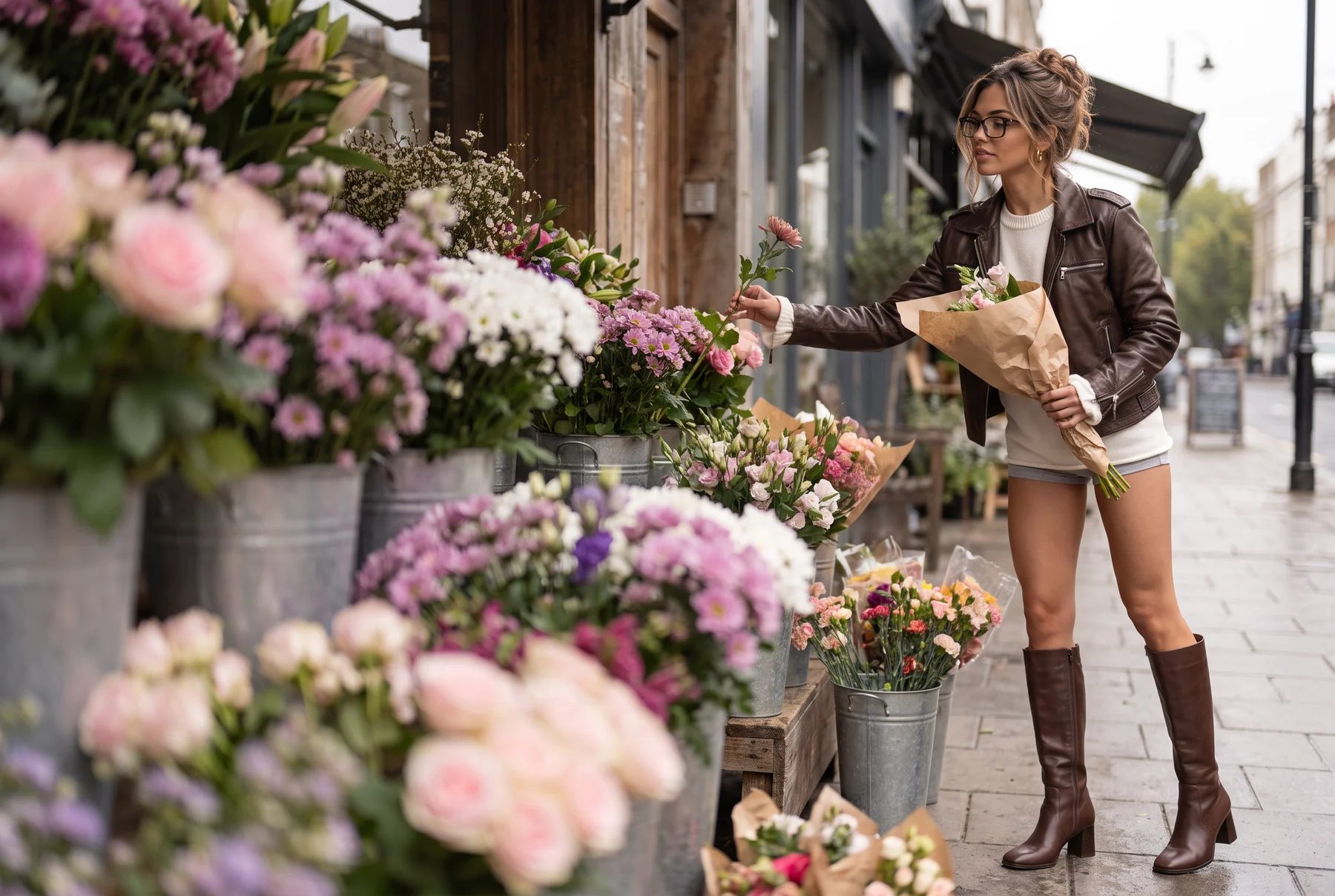
Hands still matter
A convincing face can distract from a hand that cannot hold the cup, a seam that changes direction, or a sleeve that becomes part of a wrist.
These are decisions to make at publishing size. An image that works as a thumbnail can fall apart across a magazine page. The same applies to clothing continuity: a fitted dress becoming a flowing one may look attractive while being wrong for the sequence.
Generation produces candidates. Acceptance requires looking closely, comparing them with the references, and being willing to discard an otherwise beautiful frame.
Two people are harder than one
Multi-character imagery raises the difficulty again.
It is not enough for Nia to look like Nia.
Remy also has to look like Remy.
Their scale has to make sense.
The lighting has to belong to the same physical scene.
Hands cannot merge.
Nobody can quietly become a slightly altered clone of the other person.
This is one reason Ariy&Co does not need to generate a giant “team photo” every time the team grows.
In many layouts, separate canonical portraits assembled intentionally are more reliable than asking one generation to solve five identities, a room, wardrobe, anatomy, composition, and brand direction at once.
More generation is not always more authentic.
Sometimes design is the better tool.
Editorial representation needs provenance too
When a face drifts, we need to trace which references led to it. When a picture is replaced, we need to know where it appears.
For each approved image, that means keeping the subject, source references, tool, date and approval history together. Wardrobe and crop variants belong with that record too. A prompt copied into a conversation is easy to lose and rarely tells the whole story.
The practical test is whether another editor could find the right master and make the next image without guessing which version we meant.
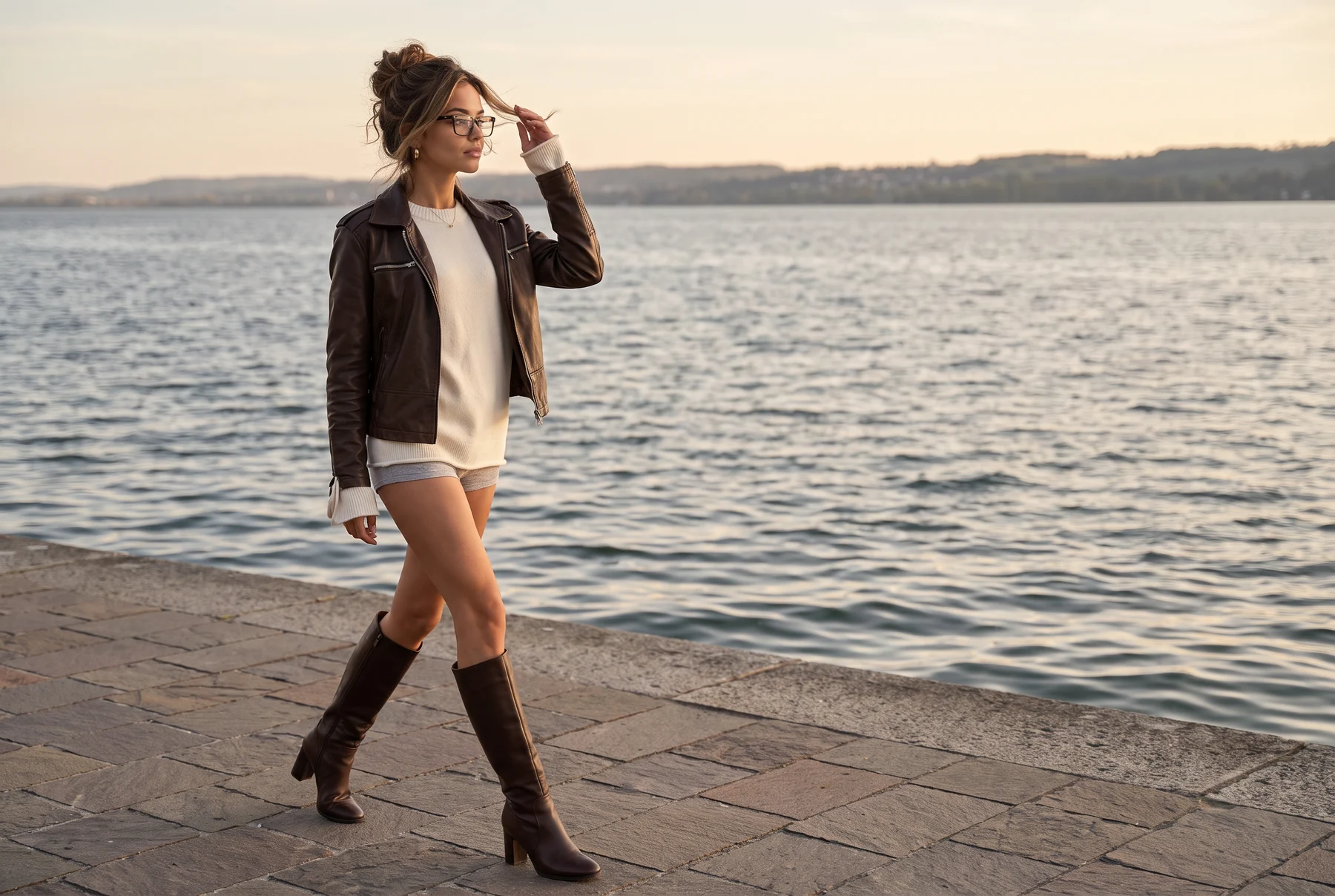
The fiftieth image is the test
Higgsfield can make a beautiful image.
OpenArt can make a beautiful image.
Several models can.
That is no longer the hardest question for us.
The real test is whether a visual system can turn those generations into a recognizable body of work without letting the character become whatever the last good prompt happened to produce.
The first image proves the model can generate.
The fiftieth proves whether we built an identity system.